
Running a Sex Offender Check in Nevada County
The California Megan's Law Website, managed by the California Department of Justice, is the main public source for Nevada County sex offender registry searches. It offers a name search and a map-based geographic search. A reader can use it to check an exact person, review a location near a home or gathering place, or understand the public information tied to a registrant.
The official Megan's Law screen is the statewide starting point for Nevada County registry information.
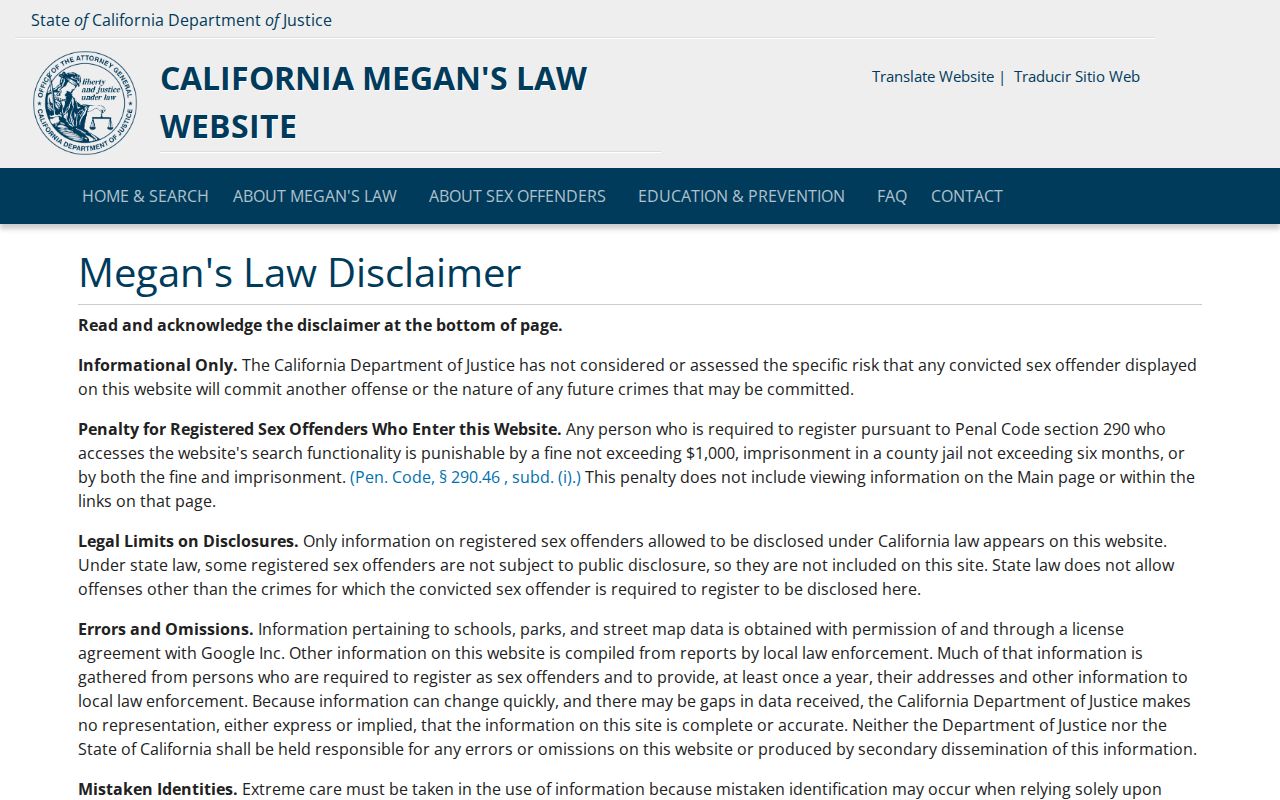
Its results reflect California's Internet-disclosure rules, so the absence of a public profile is not proof that no registration duty exists.
Local police and the Nevada County Sheriff's Office perform registration functions, but the research does not identify a separate county public list. Use the DOJ website for public results. Contact the law-enforcement agency with jurisdiction when reporting a possible violation or asking about where a registrant must appear.
Grass Valley Offender Registration Days
Grass Valley Police gives one unusually specific local channel. Residents who must register as sex or arson offenders can schedule an appointment on Tuesdays or Fridays. This is a registration service, not a public search counter. The city's police FAQ directs registrants to call the department and arrange the required visit.
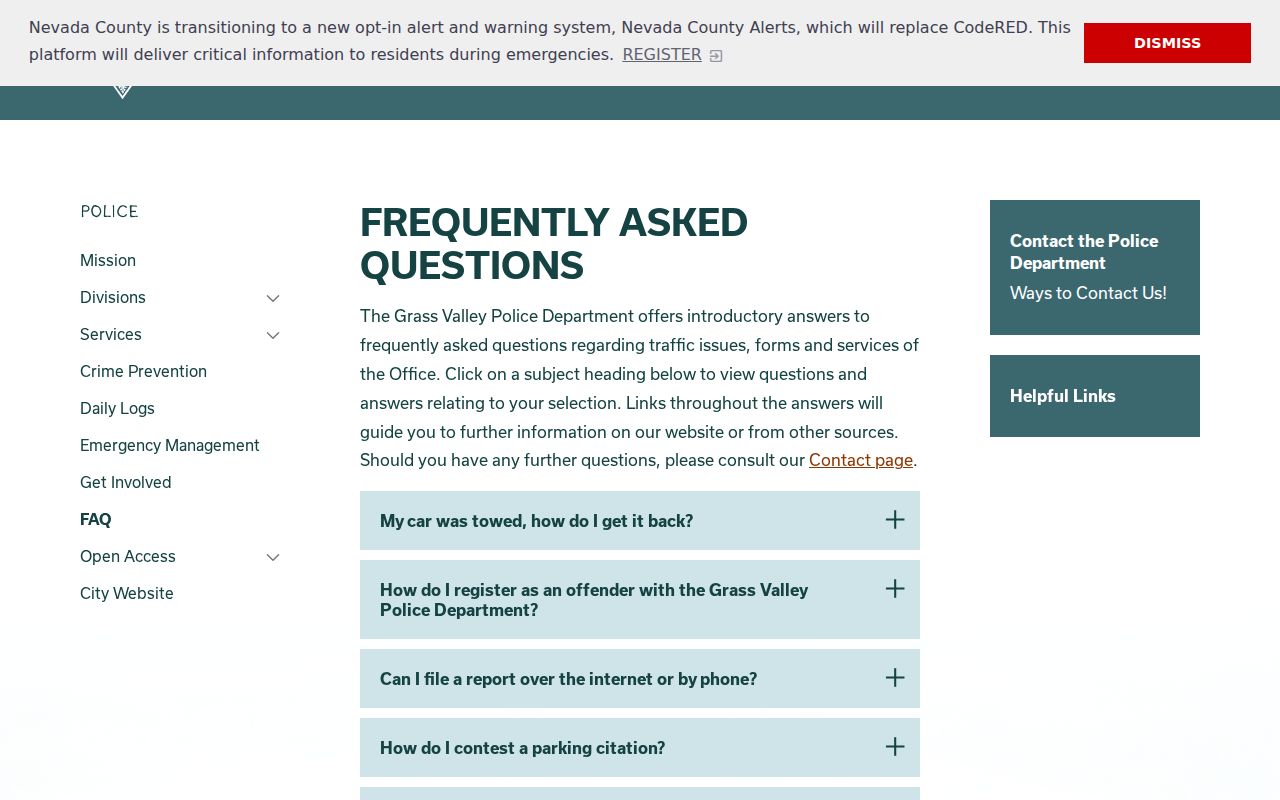
The local appointment system shows why city police and the sheriff may have different operational roles even though California DOJ publishes the public registry.
Truckee, Nevada City, and unincorporated Nevada County residents should confirm the correct registering agency for their address. Jurisdiction can depend on where the registrant lives. Public safety questions about a displayed Nevada County profile still begin with the state registry, while urgent conduct should be reported through normal law-enforcement channels.
Searching the California Megan's Law Website
Open the official registry and read its disclaimer before searching. For a known person, enter the available name information and compare identifiers. For a neighborhood check, use the map search and set the location. Common fields include last name, first name, city, ZIP code, county, address, and map radius, though the site can revise its controls.
- Open California Megan's Law and accept the conditions that govern public registry use.
- Choose a name search for a known person or a geographic search for an area.
- Enter the best Nevada County location or identity details and review possible matches.
- Open the profile and compare the photo, aliases, physical description, address information, offense, and status.
| Search field | Type | Required | Use |
|---|---|---|---|
| Last and first name | Text | Depends on search | Find a known person; allow for aliases |
| City or ZIP code | Text/select | No | Narrow results to a Nevada County community |
| County | Select | No | Filter to Nevada County |
| Address or map point | Map/text | For area search | Explore a specific location |
| Radius | Map control | For area search | Sets the distance around the chosen point |
Match more than a name. Compare the displayed photograph and physical traits because common names can return several profiles. Review the address type and update or registration status rather than assuming every marker represents a current home address.
Note: Registry results are a public-safety resource, not proof of a new crime or of conduct at the searched address.
Nevada County Search or NSOPW
The California registry is best for details published under California law. The Dru Sjodin National Sex Offender Public Website searches participating jurisdictions across the country. It can help when the person may have moved across a state line or when a Nevada County search needs a broader national check.
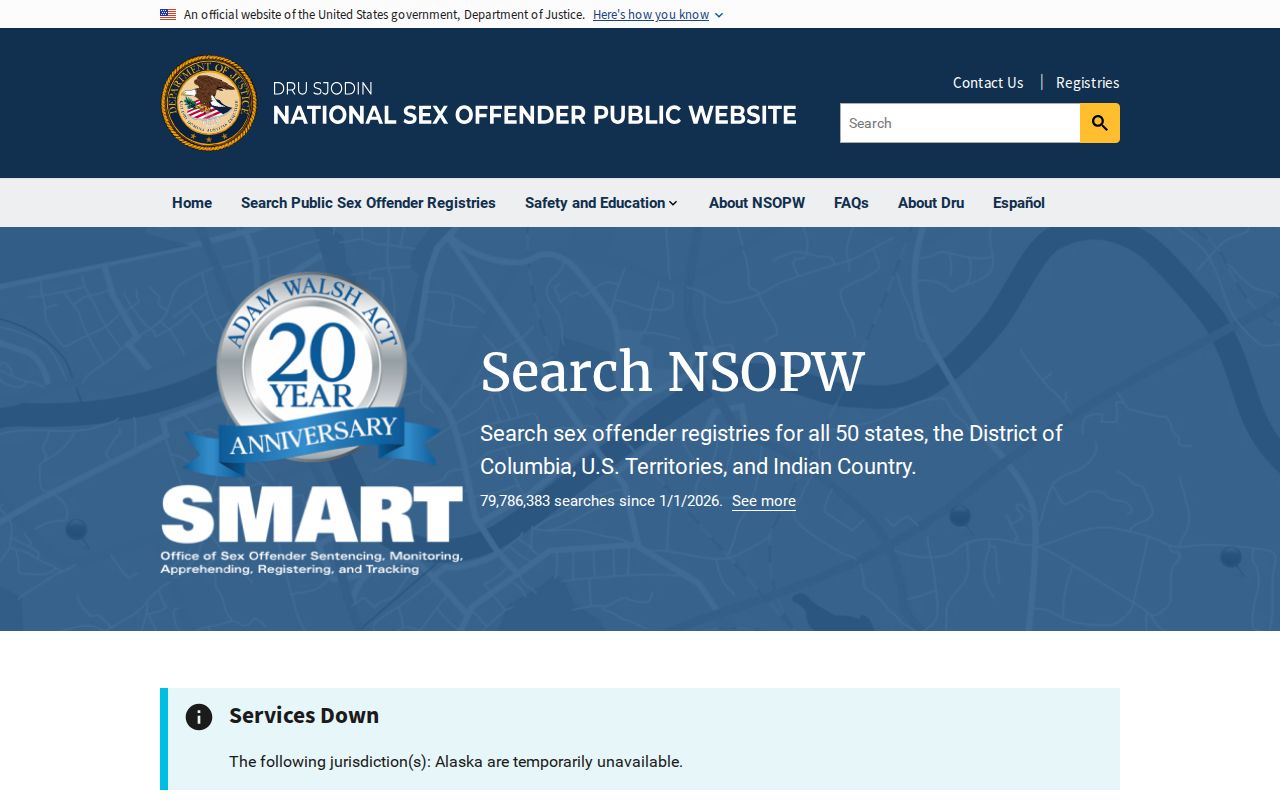
NSOPW acts as a cross-state layer, while the linked California source controls the content and disclosure of a California profile.
| Channel | Best use | Key limit |
|---|---|---|
| California Megan's Law | Nevada County name and map detail | Only information California may publish |
| NSOPW | Multi-state name or area search | Participating jurisdictions supply the data |
| Local law enforcement | Registration appointments or suspected noncompliance | Not a substitute for the public website |
Search both systems when interstate movement is part of the safety question. Differences should be resolved with the agency that supplies the record, not by treating one search result as a full criminal history.
What a Registry Profile Shows
A public profile helps distinguish one person from another and describes the basis for public registration. California research identifies name, aliases, photograph, physical description, address or location information where publishable, qualifying offense or statute, tier information when shown, and registration or compliance indicators. Fields can differ by legal disclosure category.
| Name and aliases | Published identity information used to compare possible matches. |
|---|---|
| Photo and description | Registry image plus sex, age or birth details, and physical traits when displayed. |
| Address information | Residence, community, ZIP, or map information allowed for Internet publication. |
| Offense and statute | The qualifying offense information selected for public disclosure. |
| Tier | California's registration tier when the public profile provides it. |
| Registration status | Available compliance, transient, or other status information. |
A registry photo differs from the booking photos Nevada County no longer posts in its Jail Media Report. The registry image serves statutory identification and community awareness. It should not be copied or used to shame the person. Check the full profile and official disclaimer for current context.
Nevada County Registry Is Not a Rap Sheet
A Megan's Law result answers a narrow question: whether California law allows public Internet disclosure of registry information for that person. It does not list every arrest, court filing, dismissal, or sentence. Nor does it prove present danger or new misconduct. A full Nevada County court chronology belongs in the criminal court case record, while an individual seeking their own statewide summary history uses California DOJ fingerprint record review.
The reverse is also true. A portal search that shows an old conviction does not by itself explain current registration status, tier, address publication, or relief. Registry duties and Internet visibility follow specific California statutes and can persist or change separately from what a case docket shows.
Registration Requirements and Levels in California
California's tiered system generally sets minimum registration periods by tier. Tier One has a minimum period of 10 years, Tier Two 20 years, and Tier Three lifetime registration. Juvenile periods differ, with research identifying five years for Tier One and 10 years for Tier Two. Eligibility to petition after the minimum period is not the same as automatic removal.
| Tier | General adult duration | Public visibility and verification |
|---|---|---|
| Tier One | Minimum 10 years | Internet display depends on publication law; periodic registration applies |
| Tier Two | Minimum 20 years | Internet display depends on publication law; periodic registration applies |
| Tier Three | Lifetime | Public display and registration duties follow offense and status rules |
California registrants generally update registration annually around their birthday and after specified changes. Some categories have more frequent duties. Because a profile does not always show every duty or petition issue, the registrant should work with the registering agency and court rather than rely on a public search result.
Note: Minimum tier periods do not promise removal on a set date; eligibility, compliance history, and the statutory petition process still control.
When Nevada County Registrants Are Hidden
California's Internet registry does not display every person who has a registration obligation. Penal Code 290.46 defines which information may be published and recognizes exclusions or limited disclosure in some circumstances. As a result, no result for a name or Nevada County address cannot be treated as proof that no registrant is connected to the area.
Search quality also matters. Try known aliases, confirm spelling, and use both name and map tools. If there is a concrete reason to believe a required registrant is not complying, report the facts to the police department or sheriff with jurisdiction. Do not conduct surveillance, confront anyone, or publish an accusation based on a failed search.
Mapping Nevada County Offender Records
An address search is useful for planning routes and understanding the public information around a school, park, family home, or community event. Place the map point accurately, choose a sensible radius, and open each marker rather than counting icons alone. A marker may use an address category or status that needs the profile text to interpret.
Registry maps can change as agencies update records. Check again when a safety plan depends on current information. Also keep the search proportionate. The map is one input for awareness, not a measure of a neighborhood's overall safety and not a basis to infer conduct by people who share a building or household.
Lawful Use and Community Notification
California Penal Code 290.46 authorizes Megan's Law Internet disclosure and restricts misuse of the information. Nevada County residents may use registry data for awareness and lawful safety planning. They must not use it to threaten, harass, intimidate, or commit a crime against a registrant or members of that person's household.
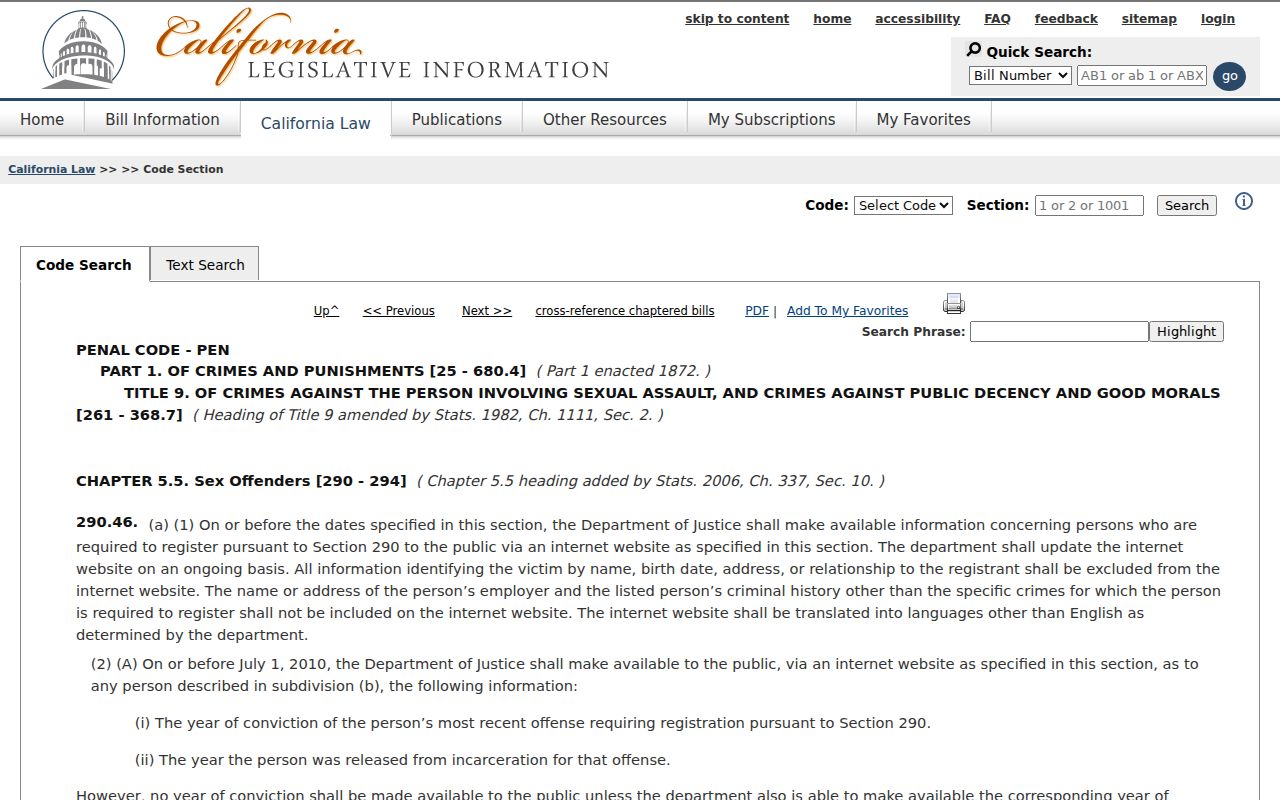
The statute source sets the legal boundary for every local and statewide registry search.
Registry misuse is a crime: Penal Code 290.46 bars using published information to commit a crime or engage in illegal discrimination, harassment, or intimidation.
Call emergency services for an immediate threat. For suspected registration noncompliance, give the responsible Nevada County law-enforcement agency specific, firsthand facts. Let trained officers verify the address, status, and duty. Community awareness works best when official information is checked, handled calmly, and kept separate from rumor.